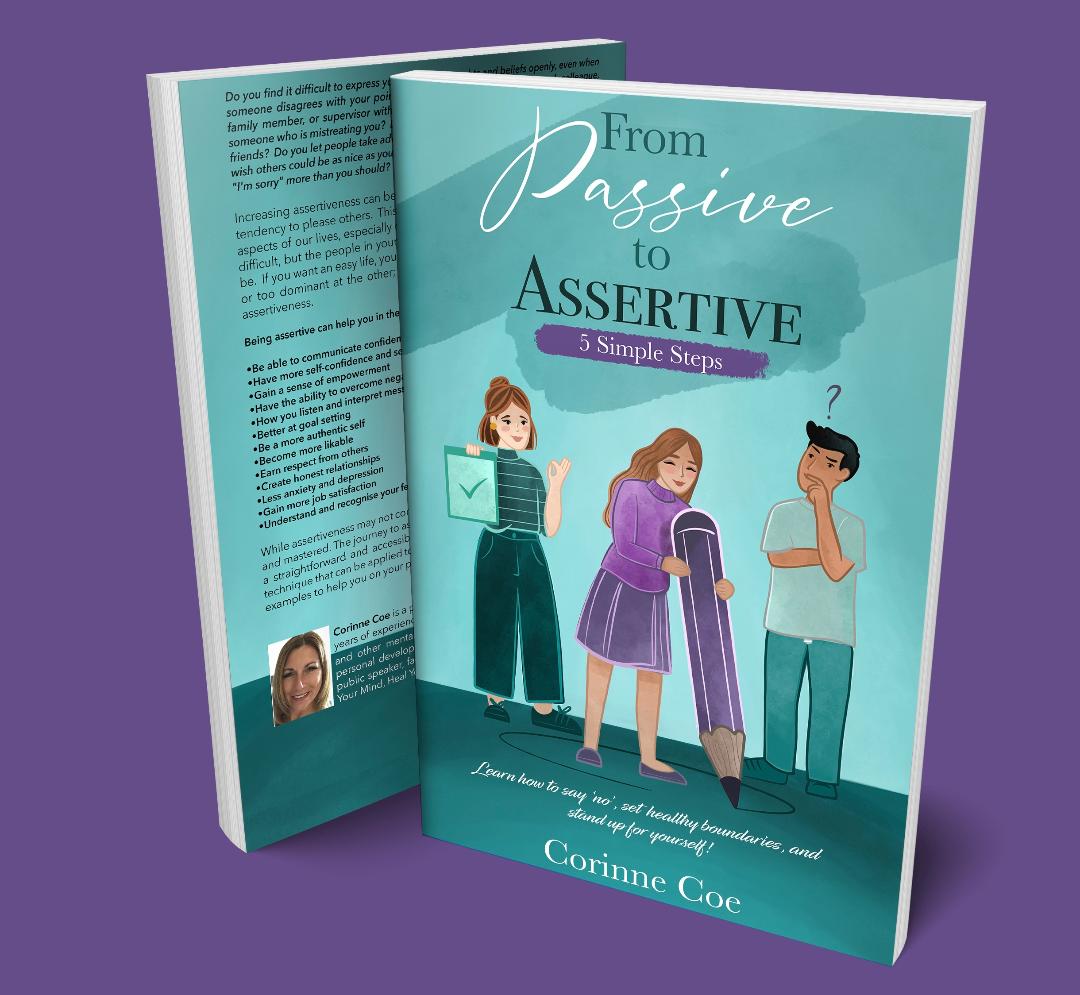
Do you find yourself saying “yes” when you really want to say “no”? Do you struggle to speak up when someone crosses a line, takes advantage of your kindness, or places unrealistic expectations on you?
Many people spend years putting other people’s needs ahead of their own, avoiding conflict, keeping the peace, and worrying about disappointing others. While kindness and consideration are important qualities, constantly sacrificing your own needs can leave you feeling exhausted, resentful, overwhelmed, and undervalued.
This is exactly why I wrote “From Passive to Assertive“, Corinne Coe.
As a psychologist, I have worked with countless people who struggle to set boundaries in their personal relationships, workplaces, friendships, and family dynamics. Many know what they want to say but freeze in the moment, worry about hurting someone’s feelings, or fear being judged as selfish.
The good news is that assertiveness is not something you are born with. It is a skill that can be learned.
What Does It Mean to Be Assertive?
Assertiveness is the ability to communicate your thoughts, feelings, needs, boundaries, and opinions in a clear, respectful, and confident way.
Being assertive does not mean being rude, aggressive, controlling, or confrontational.
Instead, it means respecting both yourself and others.
Assertive people understand that they have a right to:
- Say no without feeling guilty.
- Express their opinions respectfully.
- Ask for what they need.
- Set boundaries.
- Disagree without attacking others.
- Protect their time, energy, and wellbeing.
Why So Many People Struggle With Boundaries
Many passive people grew up learning that keeping others happy was more important than looking after themselves.
They may have learned to:
- Avoid conflict at all costs.
- Seek approval from others.
- Take responsibility for other people’s emotions.
- Feel guilty for saying no.
- Put everyone else’s needs first.
Over time, these patterns can lead to people-pleasing, burnout, resentment, anxiety, and unhealthy relationships.
Real-Life Examples Included in the Book
One of the things that makes From Passive to Assertive different is its focus on practical, real-life situations people face every day.
Workplace Example
Your manager asks you to stay back late for the third time this week.
A passive response might be:
“Okay, that’s fine.”
Even though you’re already overwhelmed and frustrated.
An assertive response might be:
“I can stay back tonight, but I won’t be available to do this regularly. I’d like to discuss a more sustainable workload.”
Friendship Example
A friend only contacts you when they need something.
A passive response might be:
Continuing to help while feeling increasingly resentful.
An assertive response might be:
“I value our friendship, but I’ve noticed our conversations tend to happen only when help is needed. I’d like our friendship to feel more balanced.”
Family Example
A family member constantly criticises your life choices.
A passive response might be:
Remaining silent while feeling hurt.
An assertive response might be:
“I understand you have a different opinion, but I’m comfortable with my decision and would appreciate it if we could respect each other’s choices.”
Why Boundaries Improve Relationships
Many people fear that setting boundaries will damage relationships.
In reality, healthy boundaries often strengthen them.
Without boundaries, resentment builds.
With boundaries, people know where they stand, communication improves, and relationships become more respectful and balanced.
Boundaries are not walls that keep people out.
They are guidelines that teach people how to treat you.
What You’ll Learn in From Passive to Assertive
This practical self-help workbook will help you:
- Understand why you struggle to be assertive.
- Recognise people-pleasing patterns.
- Build confidence speaking up.
- Learn how to say no without guilt.
- Set healthy boundaries.
- Communicate more effectively.
- Handle criticism and difficult conversations.
- Stop taking responsibility for other people’s feelings.
- Develop healthier relationships at work and in your personal life.
Most importantly, you’ll learn that protecting your own wellbeing is not selfish.
It is necessary.
Final Thoughts
You do not have to spend your life walking on eggshells, avoiding conflict, or constantly putting yourself last.
Learning to be assertive is one of the most valuable life skills you can develop.
Every healthy boundary you set sends yourself a powerful message:
“My needs matter too.”
If you’re ready to build confidence, communicate more effectively, and create healthier relationships, From Passive to Assertive provides practical strategies, real-life examples, and easy-to-follow guidance to help you get there.
And while learning these skills may feel uncomfortable at first, that discomfort is temporary. Spending a few weeks or months learning how to communicate clearly, say no when necessary, and set healthy boundaries is a small investment compared to spending decades feeling unhappy, overwhelmed, resentful, or trapped in unhealthy patterns. A short period of growth can save you a lifetime of unnecessary stress and help you create a life that feels more balanced, authentic, and fulfilling.
Book available from Amazon.com.au (AU) and Amazon.com (US/Worldwide)