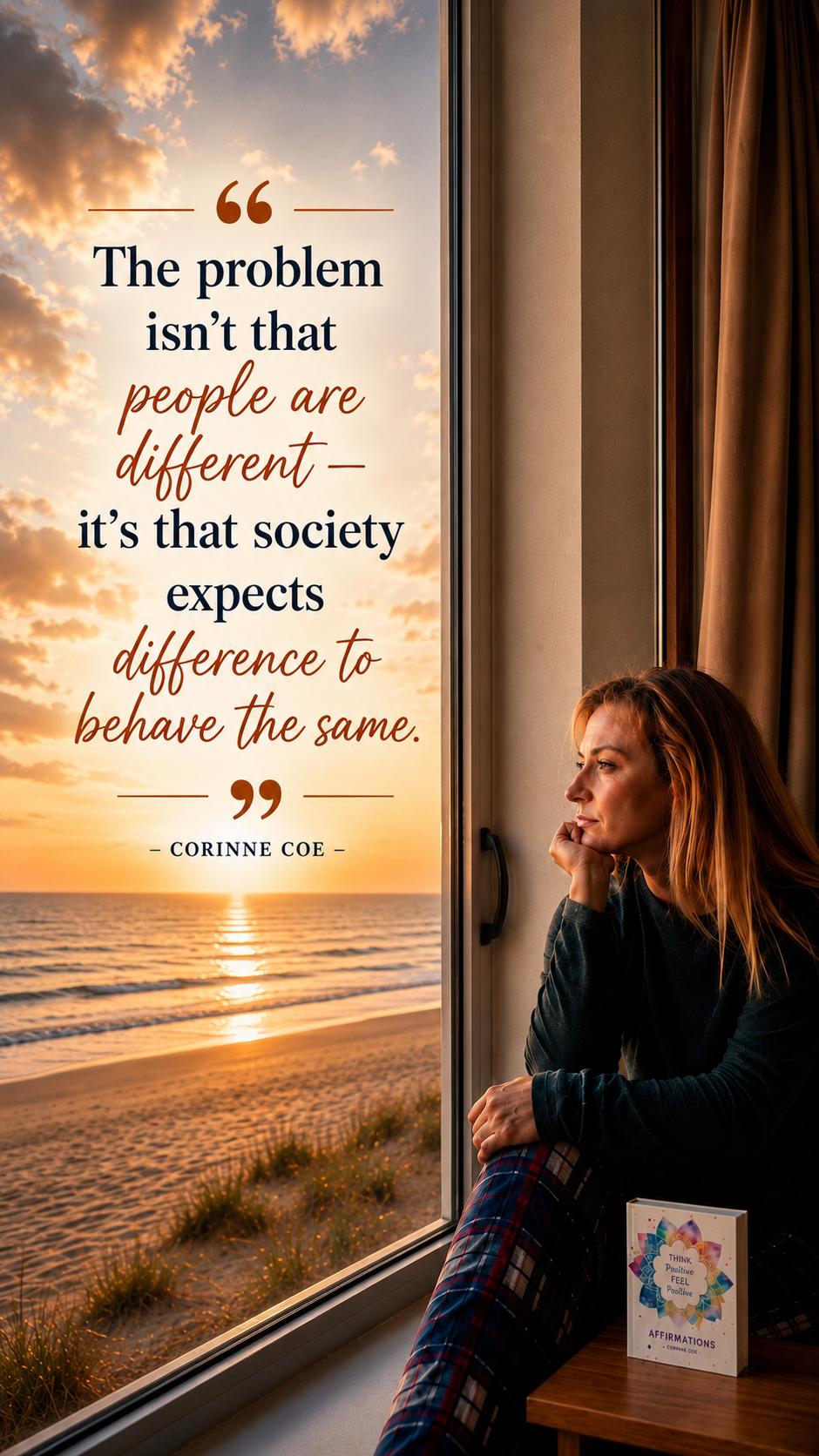
Many people grow up believing there is one “correct” way to think, feel, communicate, succeed, socialise, cope, learn, or live. Society often rewards people who fit the standard and judges those who don’t.
But human beings are not all built the same.
Some people are naturally quiet and reflective, while others are outgoing and highly social.
Some recharge alone, others around people.
Some are emotionally sensitive, deeply empathetic, creative, anxious, analytical, or unconventional.
Some communicate differently, process emotions differently, or move through life at a different pace.
Yet society often expects everyone to behave the same way anyway.
For example:
• An introvert may be labelled “antisocial” simply because they don’t enjoy constant social interaction.
• A sensitive person may be told they are “too emotional” instead of being understood.
• Someone who values peace and simplicity over money or status may be judged as “unmotivated.”
• A person healing from trauma may struggle in environments that expect everyone to function emotionally the same way.
• Children who learn differently are often made to feel unintelligent instead of being taught differently.
Over time, many people begin suppressing parts of themselves just to feel accepted. They start masking who they are, people-pleasing, forcing themselves into lifestyles and personalities that don’t genuinely suit them, and comparing themselves to people with completely different strengths, needs, personalities, and life experiences.
The issue was never human difference.
The issue is expecting different people to function identically.
One of the healthiest things you can do is stop trying to force connection with people who only value you when you fit their expectations. Seek out more like-minded people — people interested in understanding, connecting, encouraging, supporting, and growing with you rather than constantly competing with you, judging you, criticising you, or trying to change you.
Pay attention to how different people make you feel.
Some people bring peace, safety, acceptance, encouragement, and emotional freedom.
Others make you feel like you constantly need to perform, explain yourself, shrink yourself, defend yourself, or prove your worth.
Not everyone in your life deserves deep emotional access to you.
Some relationships improve through healthy conversations and mutual understanding. But if someone repeatedly judges you, dismisses who you are, competes with you, criticises your differences, or refuses to meet you halfway, sometimes the healthiest option is changing the type of relationship you have with them.
Not every person belongs in your inner circle.
Some people are better kept in the acquaintance zone rather than close emotional spaces.
Genuine people do not require you to betray yourself in order to belong. They allow you to be yourself because they value character more than conformity. They care more about kindness, honesty, loyalty, empathy, authenticity, and emotional safety than whether you perfectly fit social expectations.
Real acceptance is not forcing people to become the same.
It is allowing different people to exist without making them feel wrong for who they naturally are.
Many of these struggles — people-pleasing, fear of rejection, low self-worth, overthinking, difficulty setting boundaries, and losing yourself trying to be accepted — are explored more deeply in my books, which focus on building emotional strength, healthy self-worth, assertiveness, and learning to live more authentically.
Books by Corinne Coe: “From Passive to Assertive“, and “Think Positive Feel Positive” both can be purchased from Amazon.